Introduction to Thai Mango Sticky Rice
What is Thai Mango Sticky Rice?
If you haven’t tried Thai mango sticky rice, you’re in for a treat! This delightful dessert, known as “Khao Niew Mamuang” in Thailand, beautifully combines the sweetness of ripe mangoes with the creamy richness of coconut-infused sticky rice. It’s a staple in Thai cuisine and a beloved favorite among locals and visitors alike, often enjoyed during the warmer months or to celebrate special occasions.
So, what makes this dish so special? First, the sticky rice is steamed to perfection, resulting in a chewy texture that perfectly complements the smooth, luscious mango slices. The dish is typically topped with a sweetened coconut sauce that gives it an irresistible flavor. Many people often wonder about the origin of this dessert. According to culinary historians, it has been enjoyed in Thailand for generations, with various regional variations showcasing unique twists.
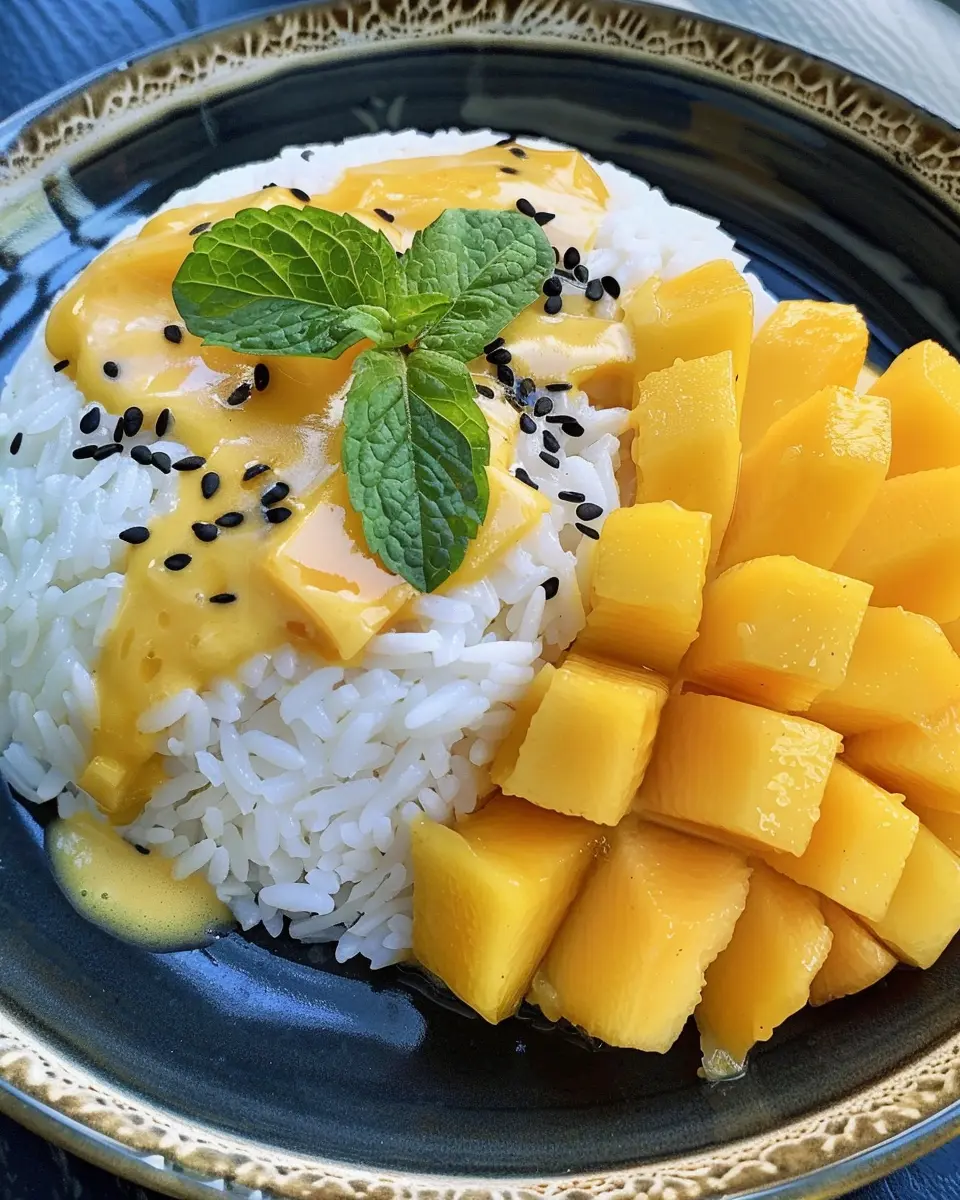
When it comes to preparing Thai mango sticky rice, simplicity is key. You’ll need just a few ingredients: glutinous rice, fresh mango, coconut milk, sugar, and a pinch of salt. What’s more, this dessert is naturally gluten-free, making it accessible to many dietary needs. It’s not only a feast for the palate but also for the eyes; the vibrant yellow mango against the white rice creates a stunning visual appeal.
As you prepare to dive into making this classic Thai treat, consider sourcing your ingredients from local markets. Fresh, in-season mangoes will elevate the flavor tremendously, giving you that authentic taste of Thailand. To learn more about selecting the perfect mango, you can check out this mango selection guide.
While this dessert shines in its simplicity, it also allows for creativity! Some people like to add crunchy toppings like toasted sesame seeds or mung beans for added texture. Whether you’re hosting a dinner party or just wanting to satisfy your sweet tooth, Thai mango sticky rice never disappoints.
Get excited, because this recipe is not just a journey in flavor; it’s a celebration of Thai culture! Now, let’s get started on creating this delicious dessert that will wow your friends and family.
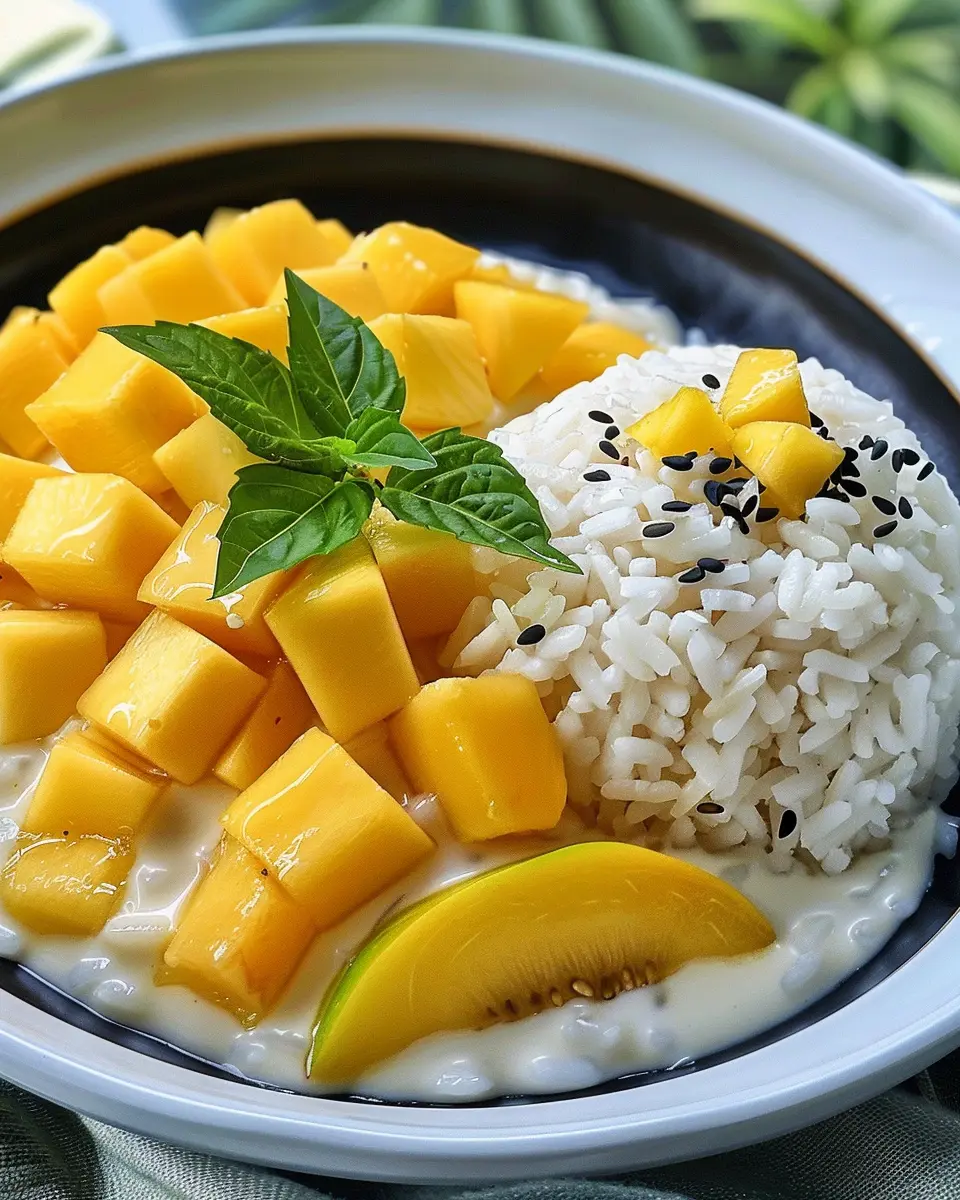
Ingredients for Thai Mango Sticky Rice
Creating the perfect Thai mango sticky rice requires just a handful of simple ingredients, which beautifully harmonize to deliver that rich, delectable flavor.
Key ingredients needed
To whip up this delightful dessert, you’ll need:
- Glutinous rice (also known as sticky rice): This is the star of the dish! It gives that iconic chewy texture.
- Fresh mango: Ripe, sweet mangoes are essential for that refreshing taste.
- Coconut milk: Creamy and flavorful, this adds the luscious sauce that makes it divine.
- Sugar: A touch of sweetness is crucial; use granulated sugar for a clean finish.
- Salt: Just a pinch to balance the sweetness and enhance the flavors.
Optional ingredients for enhanced flavors
Want to take your Thai mango sticky rice to the next level? Consider adding:
- Sesame seeds or coconut flakes: For extra texture and flavor.
- Pandan leaves: They can infuse a lovely fragrance while cooking the rice.
With these ingredients and a little preparation, you’ll find that making Thai mango sticky rice is quite simple yet impressively delicious. For more insights on choosing the right mangoes, you can check out this mango selection guide. Happy cooking!
Preparing Thai Mango Sticky Rice
Thai Mango Sticky Rice is not just a dessert; it’s an experience wrapped in the delightful fusion of flavors and textures. In this section, we’ll walk you through each step to prepare this incredible dish that will transport you straight to a bustling Thai market.
Rinse and soak the glutinous rice
The foundation of Thai Mango Sticky Rice lies in the glutinous rice, often called sticky rice or sweet rice. To ensure the best texture, start by rinsing:
- Measure: Use about 1 cup of glutinous rice.
- Rinse: Place the rice in a fine-mesh strainer or bowl and rinse under cold water. This helps remove excess starch and prevents the rice from becoming overly sticky.
- Soak: After rinsing, soak the rice in water for at least 4 hours, or preferably overnight. Soaking will make the grains more tender and allow for better absorption of flavors later on.
If you’re curious about the science behind soaking rice, it helps to soften the grains, leading to a perfectly chewy texture. Check out resources from Serious Eats for a deeper dive into rice preparation.
Steam the rice to perfection
Once the rice has soaked, it’s time to steam it. This step is crucial for achieving that signature sticky texture:
- Prepare a steamer: Place the soaked rice in a bamboo or metal steamer lined with cheesecloth. Make sure the cloth hangs over the edges to avoid rice slipping through.
- Steam: Fill a pot with water, bringing it to a gentle simmer. Place the steamer above the water (without letting the rice touch the water) and cover. Steam for about 20-30 minutes. The rice should become translucent and tender.
The steaming process is key for texture, ensuring that each bite of your Thai Mango Sticky Rice is deliciously soft yet slightly chewy.
Create the coconut sauce
The coconut sauce is the heart of this dish. Here’s how you can whip it up:
- Ingredients: Combine 1 cup of coconut milk, 1/3 cup of sugar, and a pinch of salt in a saucepan.
- Heat gently: Stir over low heat until the sugar dissolves. Avoid boiling, as boiling can change the consistency of the coconut milk.
This sauce is what makes the dish so indulgent — sweet, creamy, and totally irresistible! If you’re interested in the health benefits of coconut, you might explore insights from Healthline.
Combine rice and coconut milk
With your rice steamed and coconut sauce ready, it’s time to give them a lovely union:
- Mix: In a large bowl, combine the warm rice with about 2/3 of the coconut sauce. Fold gently to ensure the rice is evenly coated.
- Let it rest: Allow the mixture to sit for about 15-20 minutes. This lets the rice absorb the coconut flavor, enhancing every bite of your Thai Mango Sticky Rice.
This waiting period builds anticipation, as the aroma will fill your kitchen, making your mouth water.
Prepare the mango slices
While the rice is resting, prepare the fresh mango:
- Select ripe mangoes: Look for firm yet slightly soft mangoes for the best flavor.
- Slice: After peeling, slice the mango into thin strips or wedges. The sweetness of the mangoes complements the richness of the coconut sauce perfectly.
Fresh mango not only adds flavor but also brings a vibrant color to your dish, making it visually appealing.
Assemble the dish
Now for the most satisfying part — assembling your Thai Mango Sticky Rice!
- Plate the rice: Scoop a generous portion of the sticky rice onto a plate.
- Add mango: Arrange the mango slices alongside the rice.
- Drizzle: Finally, drizzle the remaining coconut sauce over the top and sprinkle with toasted sesame seeds or mung beans for added texture and crunch.
Voila! Your Thai Mango Sticky Rice is ready to be savored. Each bite offers a delightful contrast between the creamy coconut, the chewy rice, and the juicy mango — a flavor explosion that’s sure to impress! For more inspiration, explore dessert ideas on BBC Good Food, where you can find a variety of similar tropical desserts. Enjoy your culinary adventure!
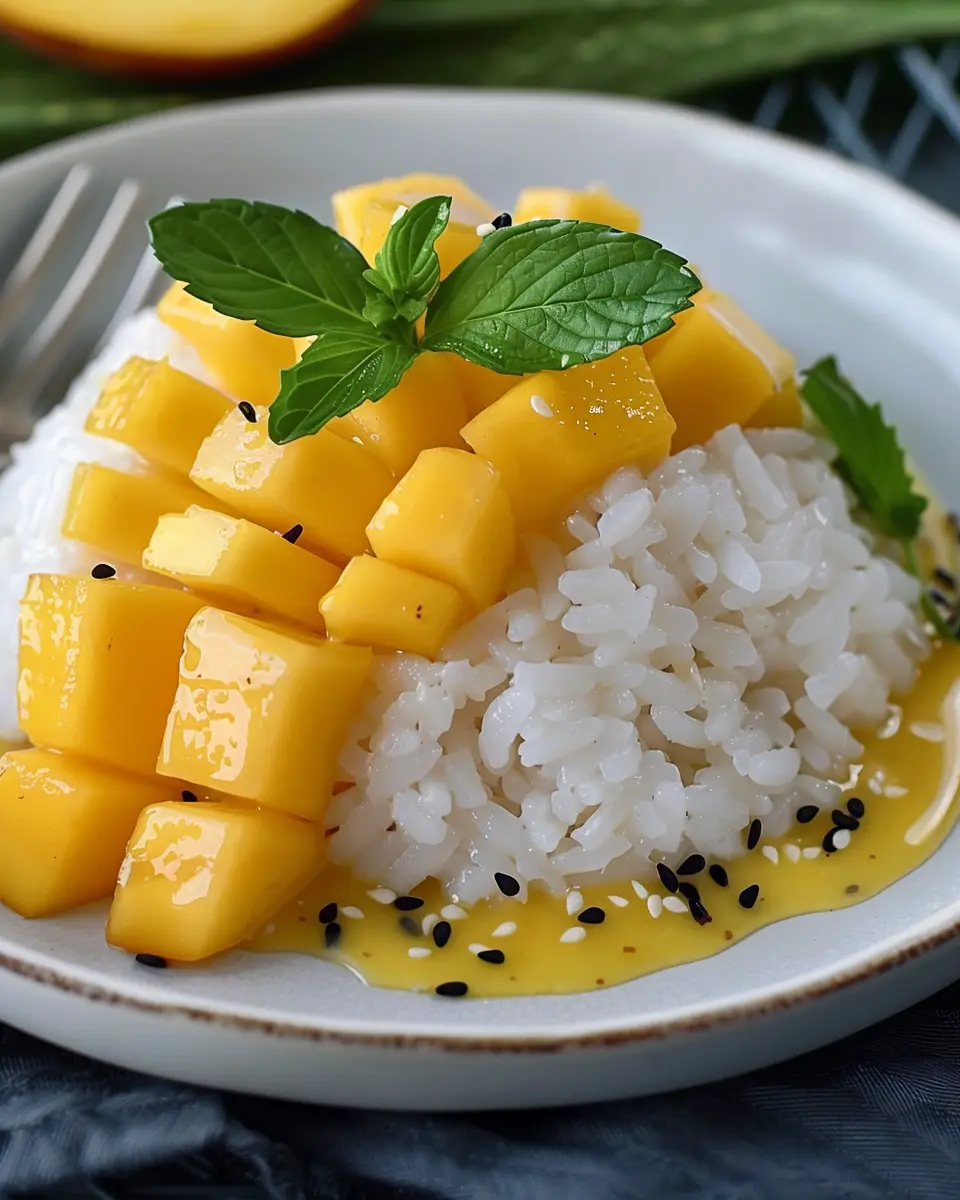
Variations on Thai Mango Sticky Rice
Using Different Fruits
While Thai mango sticky rice is undeniably a classic, you can transform it with a variety of fruits to suit your palate or season. Here are a few delicious alternatives to consider:
- Coconut Bananas: Sliced bananas add a creamy sweetness that pairs beautifully with the sticky rice and coconut milk.
- Pineapple: Fresh pineapple brings a zesty punch, making for a more tropical treat.
- Berries: Strawberries, blueberries, or raspberries provide a tart contrast that beautifully balances the sweetness of the rice.
Do you have a favorite fruit that you think could work? You might be surprised at how versatile this dish can be!
Making It Vegan-Friendly
If you’re looking to make your Thai mango sticky rice vegan, it’s actually quite straightforward. Substituting a few ingredients will keep the richness without using any animal products. Here’s how you can achieve that:
- Coconut Milk: Ensure the coconut milk you choose is free from additives like gelatin. Most canned varieties are suitable.
- Sweeteners: Instead of using regular sugar, opt for agave nectar or maple syrup for a vegan-friendly sweetness.
This twist not only maintains the integrity of the dish but also opens it up to a wider audience.
Feel free to experiment—creativity in the kitchen is the key to finding your perfect version of Thai mango sticky rice. For more inspiration, check out this guide on fruit pairings to discover what complements your created dishes best!
With these variations, you can enjoy a different take on the beloved classic and impress your friends at your next gathering.
Cooking Tips and Notes for Thai Mango Sticky Rice
Perfecting the Rice Texture
To achieve the perfect Thai mango sticky rice, you’ll want to start with glutinous rice, often labeled as “sticky rice” or “sweet rice.” Soaking it overnight is key; not only does this enhance the texture, but it also ensures it cooks evenly. When steaming, use a bamboo or metal steamer lined with cheesecloth. This will keep the rice from slipping through while allowing the steam to circulate properly. For a truly authentic experience, consider trying a rice cooker set to the sticky rice function, if you have one!
Common Mistakes to Avoid
Even seasoned cooks can stumble here! One major pitfall is overcooking the rice, which leads to a mushy texture. Always keep an eye on the cooking time and use a timer. Additionally, when making the coconut sauce, don’t forget to dissolve the sugar in the coconut milk before adding it to the rice; this helps to blend the flavors seamlessly. Lastly, be cautious with the salt. A pinch can elevate the dish, but go overboard, and it can overpower the sweetness of the mango.
For more tips, you might find Serious Eats quite informative!
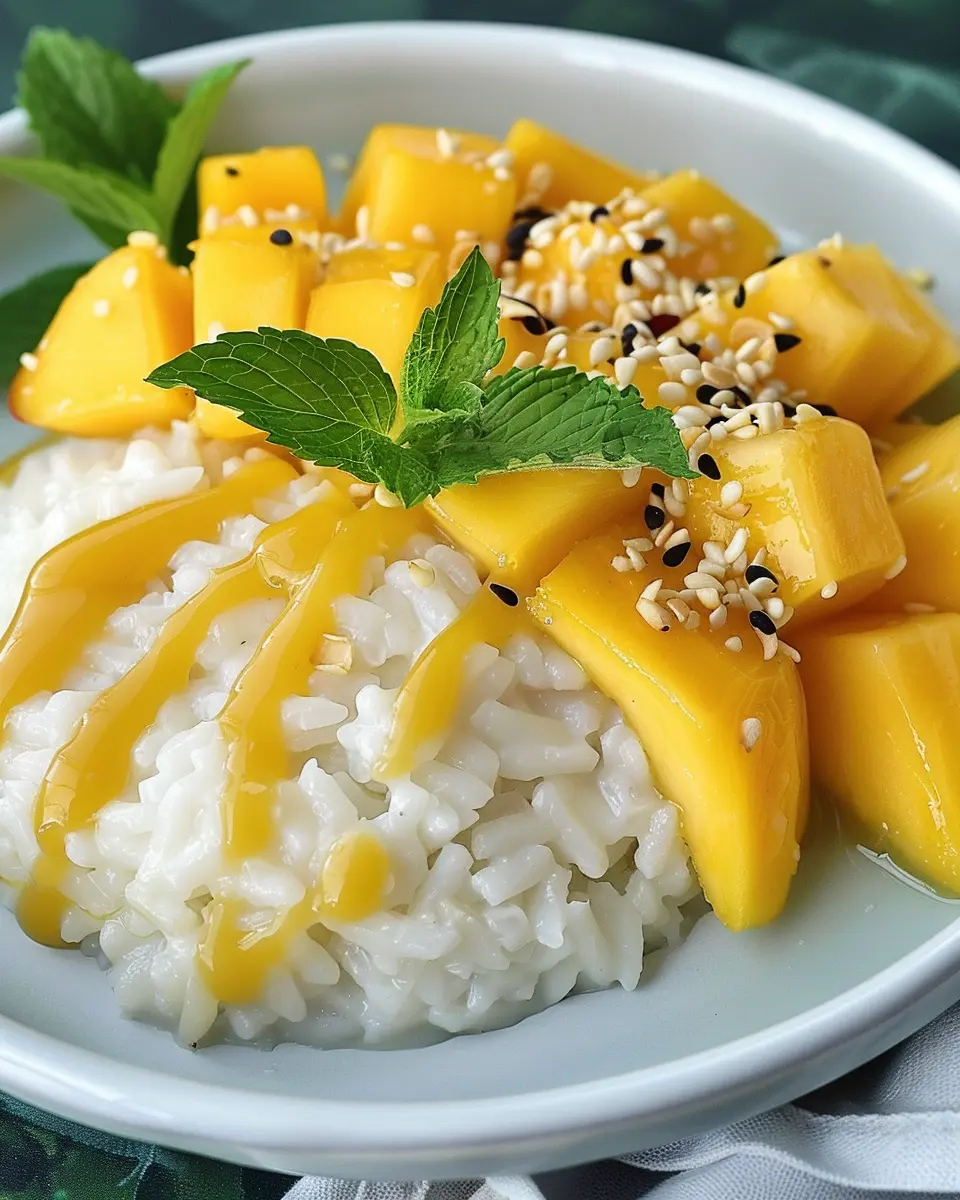
Serving suggestions for Thai Mango Sticky Rice
Creative plating ideas
When it comes to serving Thai mango sticky rice, presentation can truly elevate the experience. Try layering the sticky rice in a glass jar to create a visually appealing dessert. Top it with slices of fresh mango, a sprinkle of toasted coconut, and a drizzle of coconut cream. Alternatively, shape the sticky rice into small balls or squares and serve them on a banana leaf for a more traditional touch.
For an extra pop of color, garnish your dish with edible flowers or fresh mint leaves. These little details not only delight the eyes but also enhance the overall eating experience.
Pairing with beverages
While enjoying your Thai mango sticky rice, consider pairing it with refreshing beverages to balance the sweetness. Coconut water offers a tropical vibe that complements the dish beautifully. For something more substantial, a chilled Jasmine tea or Thai iced tea brings a rich flavor that complements the dessert’s sweetness.
Looking for something unique? Try serving it with a Thai-style fruit smoothie—made with papaya, pineapple, or banana—for an all-around fruity delight.
For more information about beverage pairings, check out sources like Food & Wine for ideas that inspire.
Time details for Thai Mango Sticky Rice
Preparation time
Cooking this delicious Thai mango sticky rice begins with about 30 minutes of preparation. During this time, you’ll soak the glutinous rice to ensure it cooks evenly and becomes delightfully tender.
Cooking time
Once prepped, the cooking part will take roughly 25 minutes. You’ll steam the rice, allowing it to absorb all the wonderful flavors.
Total time
From start to finish, you’re looking at approximately 55 minutes. It’s a relatively quick dessert for the joy it brings! If you’re eager to indulge without extended kitchen time, this recipe is ideal. Get the full experience and tips on perfecting your Thai mango sticky rice here—More on Thai cuisine!.
Nutritional Information for Thai Mango Sticky Rice
Calories
If you’re curious about the calories in Thai mango sticky rice, you’re in for a tasty surprise! A serving typically contains about 300-400 calories, which makes it a moderate indulgence perfect for a dessert or special treat. Of course, this can vary depending on the amount of coconut milk and sugar you use, so feel free to adjust based on your preferences.
Macronutrient Breakdown
When it comes to the macronutrient profile of Thai mango sticky rice, here’s a quick overview:
-
Carbohydrates: Roughly 72 grams per serving, primarily from glutinous rice and mango. This makes it an energy-boosting delight!
-
Protein: With about 4 grams per serving, it’s not a protein powerhouse but still offers some nourishment from the rice and coconut milk.
-
Fats: Expect around 7 grams of fats, mostly from the coconut milk, which also contributes to that creamy texture we all love.
This delectable treat is also a source of vitamins from the fresh mango, making it not just delicious but a sweeter way to include fruits in your diet. For further reading on the nutritional benefits of mangoes, you can check out this nutrition website.
Thai mango sticky rice is a delightful balance of sweetness and texture; just remember to enjoy it in moderation as part of a balanced diet!
FAQs about Thai Mango Sticky Rice
Can I use regular rice instead of glutinous rice?
Great question! While you might be tempted to swap in regular rice for Thai mango sticky rice, it’s not recommended. Glutinous rice has a unique sticky texture that’s essential for this dish. It allows the rice to clump together and hold the delicious coconut sauce effectively. If you can’t find glutinous rice at your local grocery store, check out Asian markets or look online for options. Your taste buds will thank you!
What’s the best way to store leftovers?
If you find yourself with leftover Thai mango sticky rice, storing it properly can help maintain its deliciousness. Here’s how:
- Refrigerate: Place the sticky rice in an airtight container. It should stay fresh for up to 2-3 days.
- Freeze: For longer storage, you can freeze individual portions. Thaw in the refrigerator before reheating.
When you’re ready to enjoy it again, simply steam it or microwave it gently, and feel free to add a splash of coconut milk to revive that delightful flavor.
How can I make this recipe ahead of time?
Making Thai mango sticky rice in advance is a fantastic option for meal prep or entertaining. Prepare the sticky rice and coconut sauce, and store them separately in the fridge. Just before serving, slice fresh mango and combine the components. This way, you keep everything fresh and tasty without compromising on flavor. For tips on preparation timing, check out resources from culinary experts like Food52 or The Kitchn for additional insights on meal planning.
Remember, this dish is all about maintaining that perfect texture and delicious taste, so prep wisely!
Conclusion on Thai Mango Sticky Rice
Why You Should Try Making It at Home
Creating Thai mango sticky rice at home is a delightful experience that transcends mere cooking. It’s about bringing a piece of Thailand’s vibrant culture into your kitchen. The sweet, luscious mango paired with creamy coconut-infused sticky rice is a feast for both the eyes and palate.
Not only is this dish straightforward, but it also brings a unique sense of accomplishment. Imagine impressing friends at your next dinner party with a traditional dessert! Plus, making it at home allows for customization; you can adjust the sweetness or add toppings that suit your palate best.
If you’re curious about authentic Thai ingredients, consider exploring local Asian markets or checking out online sources like Serious Eats for tips and inspiration. With just a few simple ingredients, you can enjoy an unforgettable treat that’s sure to charm. Why wait? Dive into the delightful world of Thai mango sticky rice today!
PrintThai Mango Sticky Rice: An Easy Indulgence You’ll Love
Discover the delightful taste and texture of Thai Mango Sticky Rice, a perfect dessert for any occasion.
- Prep Time: 15 minutes
- Cook Time: 30 minutes
- Total Time: 4 hours 45 minutes
- Yield: 4 servings 1x
- Category: Dessert
- Method: steaming
- Cuisine: Thai
- Diet: vegetarian
Ingredients
- 1 cup glutinous rice
- 1 cup coconut milk
- 2 tablespoons sugar
- 1/2 teaspoon salt
- 2 ripe mangoes, peeled and sliced
- 1 tablespoon sesame seeds for garnish
Instructions
- Rinse the glutinous rice under cold water until the water runs clear.
- Soak the rice in water for at least 4 hours, or overnight.
- Drain and steam the rice for about 20-25 minutes until cooked.
- In a saucepan, combine coconut milk, sugar, and salt. Heat until the sugar dissolves.
- Mix about half of the coconut sauce with the cooked rice and let it sit for about 30 minutes.
- To serve, place the sticky rice on a plate, top with mango slices, and drizzle remaining coconut sauce over it.
- Garnish with sesame seeds.
Notes
- Ensure the rice is soaked adequately for the best texture.
- Use ripe, sweet mangoes for optimal taste.
Nutrition
- Serving Size: 1 serving
- Calories: 260
- Sugar: 10g
- Sodium: 100mg
- Fat: 12g
- Saturated Fat: 10g
- Unsaturated Fat: 2g
- Trans Fat: 0g
- Carbohydrates: 36g
- Fiber: 1g
- Protein: 3g
- Cholesterol: 0mg
Keywords: Thai Mango Sticky Rice, dessert, Thai dessert, mango recipe, sticky rice